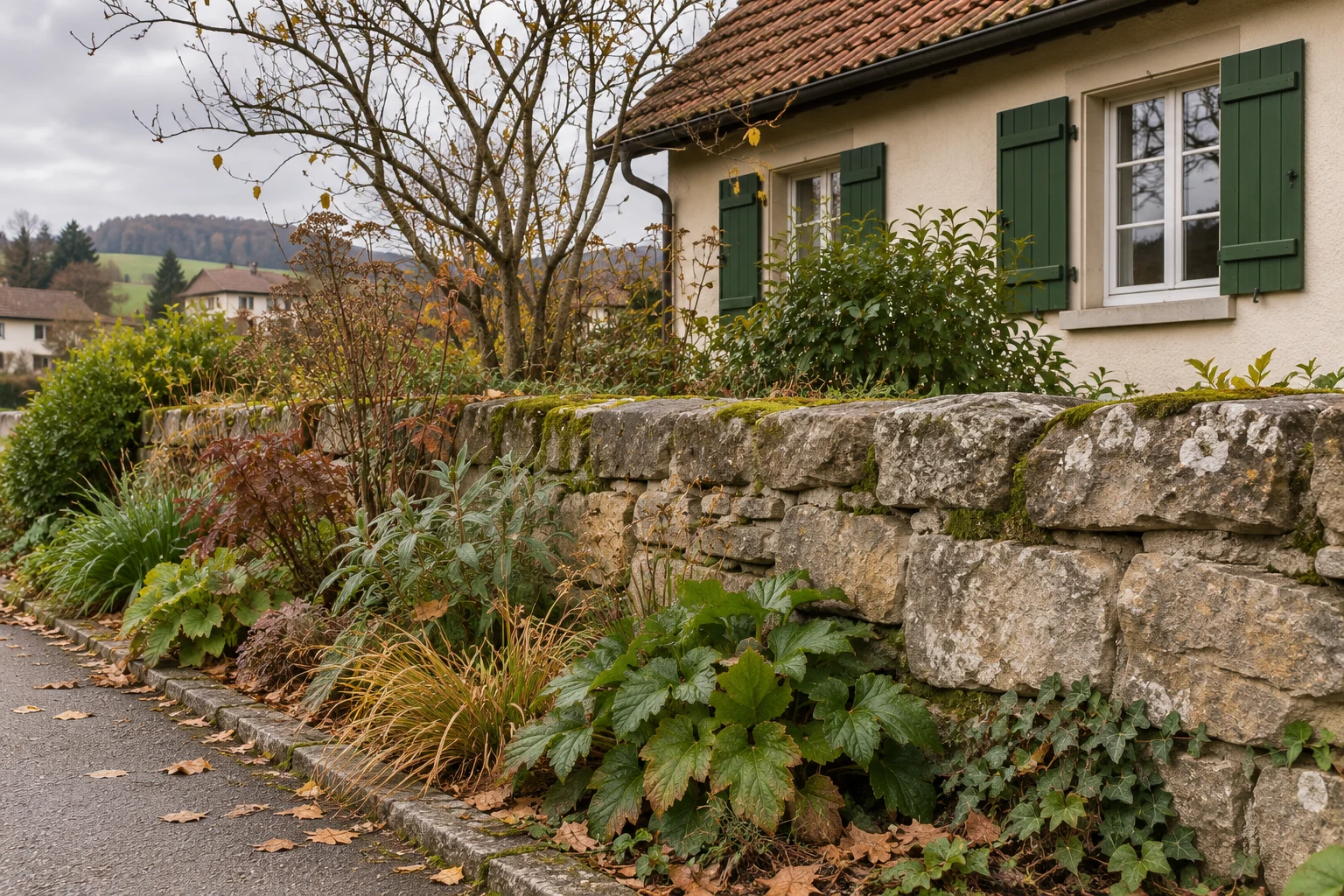
Switzerland. Residential gardens and shared spaces. Check disposal guidance locally.
Before cutting an unfamiliar plant
- 01
Observe
Take photos and note the location.
- 02
Identify
Compare fact sheets and ask for advice if needed.
- 03
Act
Check the appropriate local treatment and disposal route.
Take photos from an accessible spot
Has a clump of unfamiliar plants appeared at the foot of a wall or beside a hedge? Take a photo of the whole patch before using a brushcutter. If you can do so without touching the plant, photograph the leaves, stems and any flowers or fruit as well. Note the date, the location and roughly how much ground it covers. A wide photo helps you find the spot again, for example beside a path or behind a flower bed.
Get the identification confirmed
Compare your photos with Info Flora’s fact sheets. A match in a single photo can leave room for doubt. If you are unsure, ask the relevant cantonal service and include your photos and a description of the location. In a shared garden, also tell whoever organises maintenance so the patch is not mown by mistake before the plant has been identified.
Check how to dispose of any cuttings
If the plant is confirmed as an invasive alien species, ask which treatment and disposal route suit the species and location. Info Flora recommends preventing the spread of plant material that can reproduce and keeping it out of garden compost. If stems have already been cut, mention this when you ask for advice. Wait for local guidance before moving the cuttings or putting them in the green waste.
Editorial checklist prepared with AI assistance. General guidance; technical, legal and financial points need individual verification.
FAQ
Should I pull up a sample to show someone?
Start with photos taken on site and ask for advice before handling or moving the plant.
Your question, our next article?
Ask about this topic. Selected questions may become articles or FAQ updates without publishing your email. Avoid confidential information.